There's a particular kind of nervousness that comes with booking your first Ayurvedic massage. You've probably seen the word "Ayurveda" everywhere in Rishikesh — on shop signs near Laxman Jhula, on menus, on yoga studio walls — but the actual experience of lying down and letting someone work warm herbal oil into your body is still an unknown. If you're weighing whether to book, or you already have and want to know what's coming, here's what actually happens, without the marketing gloss.
It Starts With a Conversation, Not a Table
A good Ayurvedic massage doesn't begin with you lying face-down on a table. It begins with a short conversation — sometimes five minutes, sometimes twenty — about your body. A trained therapist will ask about your energy levels, digestion, sleep, any pain or stiffness, and occasionally things that feel unrelated, like whether you tend to feel cold or run warm, or whether your mind races at night.
This isn't small talk. In Ayurveda, everyone is considered a mix of three doshas — Vata, Pitta, and Kapha — and the oils, pressure, and pacing of your massage are meant to be adjusted based on which one is out of balance. Someone dealing with anxiety and dry skin (often a Vata imbalance) will get a different oil and rhythm than someone dealing with inflammation or a short temper (Pitta), or sluggishness and water retention (Kapha). A rushed five-minute intake usually means a generic massage. A longer one is a good sign the practitioner is actually paying attention.
The Oil Matters More Than People Expect
Most first-timers assume oil is just there to reduce friction. In Ayurveda, the oil is half the treatment. Sesame oil is the most traditional base — warming, grounding, good for dry or aging skin. Coconut oil is cooling and often used in hotter months or for people running warm. Herb-infused oils, sometimes with ashwagandha, brahmi, or bala, are added depending on what your body needs — calming the nervous system, easing joint pain, or improving circulation.
You'll usually see the oil warmed before it touches your skin. This isn't a spa luxury detail — cold oil doesn't absorb the same way, and warmth helps loosen tight muscle tissue before any real pressure is applied.
What the Massage Itself Feels Like
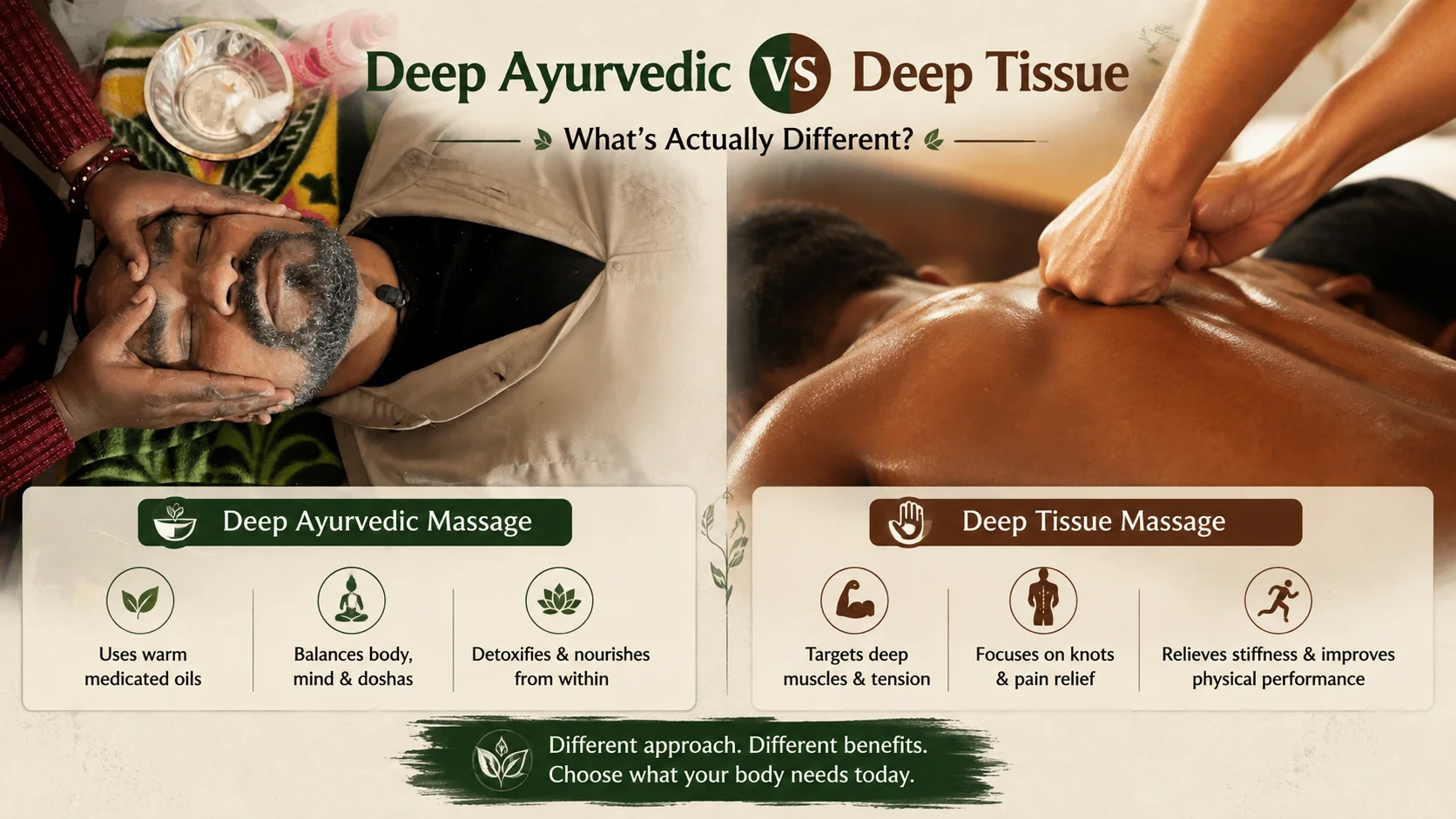
The technique most people experience on a first visit is Abhyanga, a full-body oil massage using long, firm strokes — different from the shorter, more localized strokes you'd get in a Swedish or deep tissue massage. Strokes generally follow the direction of the limbs and the flow of lymph, moving toward the heart. Some practitioners will focus more time on marma points — specific points on the body believed to be centers of vital energy, similar in concept to acupressure points.
Pressure is usually firmer than people expect from something described as "gentle" or "relaxing." It's not a light spa touch. It's meant to work into muscle and encourage circulation, not just skim the surface. If the pressure is too strong or too light for you, say something — a good therapist adjusts in real time.
A full-body Abhyanga typically runs 60 to 90 minutes. Many places in Rishikesh also offer it as a lead-in to Shirodhara, where warm oil is poured in a steady stream over the forehead — usually booked separately, but worth asking about if deep relaxation or sleep issues are your main goal.
After the Massage: The Part Nobody Warns You About
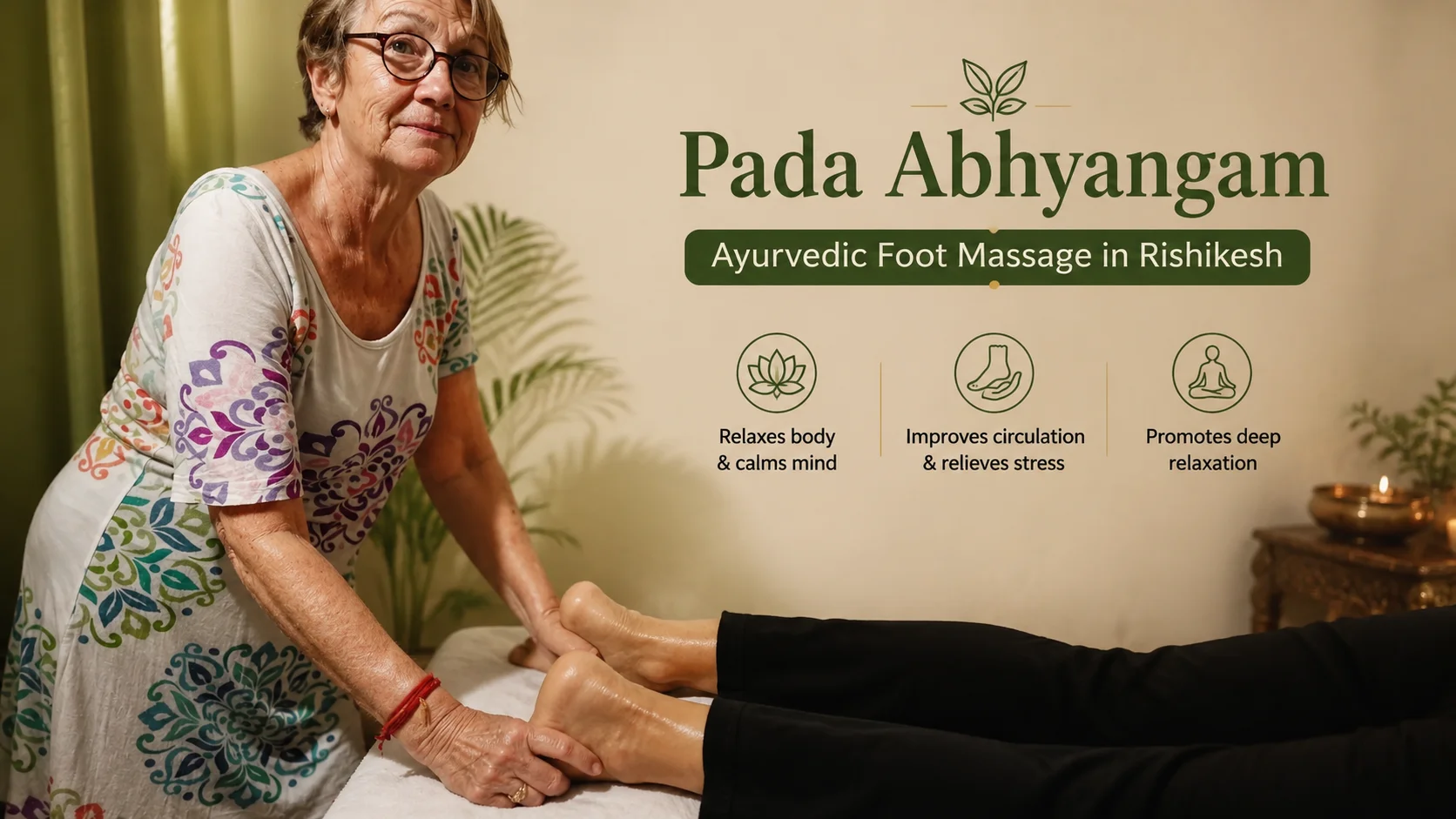
Here's what most first-timers aren't told: you'll be oily. Very oily. A good spa will let the oil sit for a while before a warm shower or a herbal powder scrub (udvartana) to help remove it, because the oil is meant to keep absorbing into the skin, not get washed off immediately. Don't book anything requiring you to look presentable right after — give yourself at least an hour of buffer.
You might also feel unexpectedly tired, or occasionally a little emotional, in the hours afterward. This is normal. Deep tissue work combined with warm oil can release physical tension that's been held for a long time, and that sometimes comes with an emotional response. Drink water, rest if you can, and avoid anything too stimulating — caffeine, alcohol, or heavy food — for the rest of the day.
Why Rishikesh Specifically
Rishikesh has practiced Ayurveda alongside yoga for generations, not as a wellness trend but as daily medicine. What that means practically for you as a visitor: many therapists here trained under family lineages or gurukul-style apprenticeships rather than short certificate courses, and the herbs used are often sourced locally from the Himalayan foothills rather than imported substitutes. That doesn't guarantee quality at every spa in town — Rishikesh has plenty of massage parlors riding the Ayurveda label without the training behind it — but it does mean the real thing is easier to find here than almost anywhere else in India.
How to Tell You've Found a Good One
A few practical signs: they ask about your health history before touching you, the oil is warmed rather than poured cold from a bottle, the room doesn't smell like a generic spa (real herbal oils have a distinct, earthy smell, not perfume), and the therapist doesn't rush you out the door the moment the timer ends. If a session feels identical to a hotel spa massage with a Sanskrit name slapped on it, it probably is.
FAQ
How long should my first Ayurvedic massage session be? Most first-time sessions run 60–90 minutes for a full-body Abhyanga. Shorter sessions exist, but a proper consultation plus full-body treatment rarely fits into less than an hour.
Is Ayurvedic massage painful? It shouldn't be painful, but it's often firmer than a typical relaxation massage. Some pressure on tense areas is normal; sharp pain is not. Always tell your therapist if something hurts.
Do I need to shower before the massage? No special preparation is needed. Avoid heavy meals right before your session, and wear something you don't mind getting oil on for the trip home.
Can I get an Ayurvedic massage if I have a medical condition? Mention any medical conditions, recent injuries, or pregnancy during the consultation. Most Ayurvedic massages can be adapted, but pregnant guests, in particular, need a therapist trained in prenatal-safe techniques and oils.
How often should I get an Ayurvedic massage? For general wellness, once a month is common. If you're addressing a specific issue — chronic pain, stress, poor sleep — a short series of sessions over one to two weeks (sometimes as part of a Panchakarma program) tends to show more noticeable results than a single visit.