If you've ever noticed circular reddish-purple marks on someone's back — an Olympic swimmer, a friend back from a wellness retreat, a Rishikesh regular — and assumed it was some kind of injury, you've seen the aftermath of cupping. It looks alarming the first time you see it. It's also one of the more misunderstood treatments in Ayurvedic and traditional medicine, mostly because people fixate on the marks and skip past what the treatment is actually doing.
What Cupping Actually Is
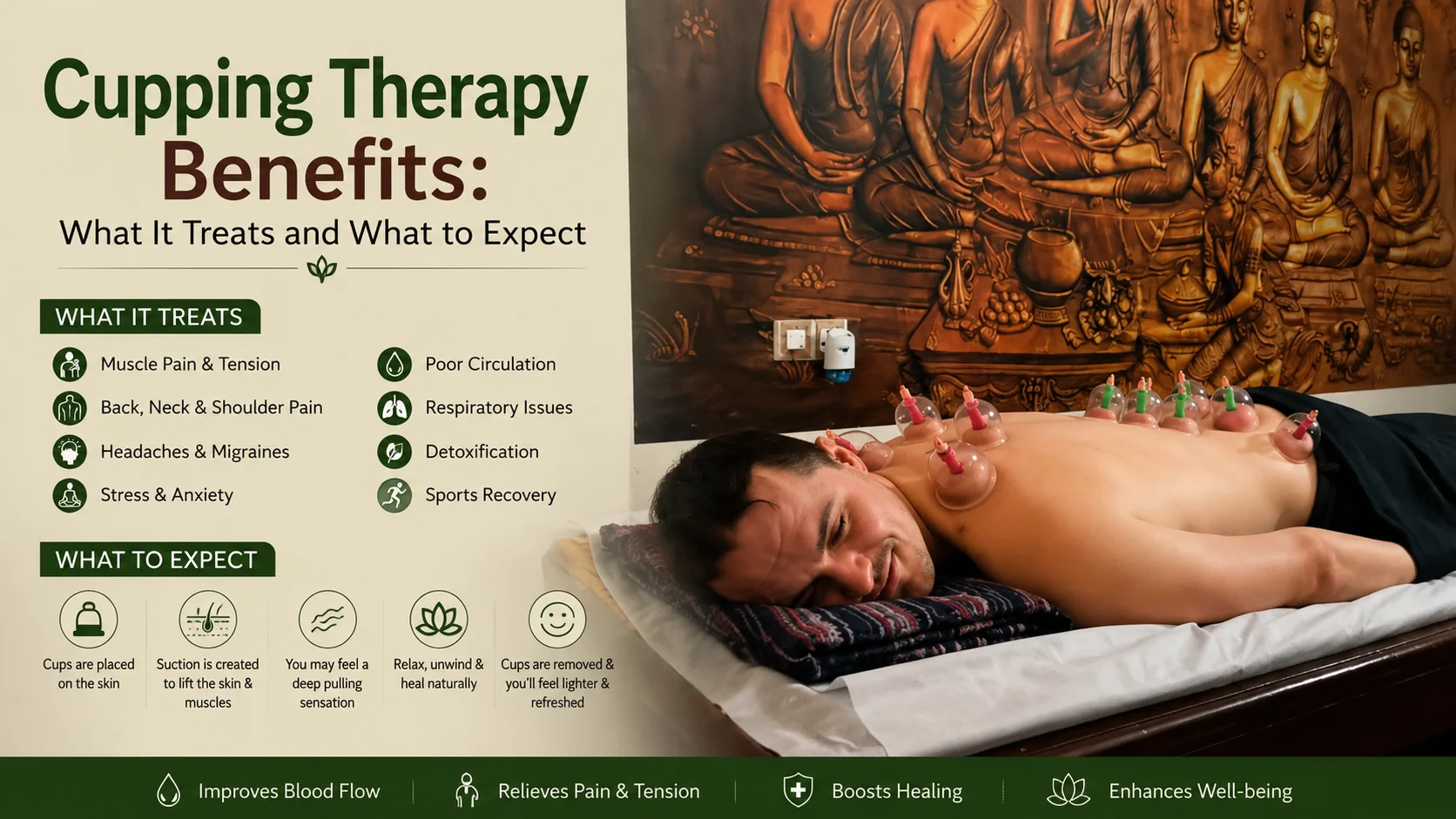
Cupping uses small glass, bamboo, or silicone cups placed on the skin with suction created either by heat (a flame briefly heats the air inside the cup before it's placed) or a manual pump. The suction pulls the skin and the layer of tissue just beneath it slightly upward into the cup. That pulling action is the whole mechanism — it draws blood flow toward the surface, releases tight connective tissue, and, according to Ayurvedic theory, helps move stagnant "ama" (toxins or blocked energy) out of the area being treated.
There are two broad types. Dry cupping is just the suction — cups are placed, left for several minutes, then removed. Wet cupping adds a small, controlled skin incision after the initial suction, allowing a small amount of blood to be drawn out along with the second round of suction. Wet cupping is less common in general wellness settings and is typically only done by practitioners with specific training in it. Most people getting cupping for the first time in a spa or Ayurvedic setting are getting dry cupping.
What It's Actually Used For
Cupping isn't a one-purpose treatment. The most common reasons people book a session:
Muscle tension and back pain. This is the biggest one. People who sit for long hours, carry heavy bags while trekking, or hold tension in the shoulders and lower back often find cupping loosens tightness that massage alone doesn't fully release, because the suction works on a different layer of tissue than pressure-based massage does.
Poor circulation. The suction draws blood to the surface, which can help areas that feel chronically stiff, cold, or under-circulated.
Respiratory congestion. In traditional practice, cupping on the upper back and chest area has long been used to help loosen chest congestion, particularly for lingering coughs or the aftermath of a cold — something a fair number of travelers experience after altitude changes or long flights into the region.
Stress and general fatigue. Less measurable, but frequently reported: people describe feeling noticeably lighter and less tense after a session, similar to the release some people feel after a deep tissue massage.
Cupping is not typically recommended as a standalone treatment for serious medical conditions, and it shouldn't replace medical care for anything beyond general tension and circulation. A good practitioner will tell you plainly if your concern is better addressed elsewhere.
What a Session Feels Like
The cups are usually placed along the back, shoulders, or sometimes the legs, depending on what you're treating. You'll feel a distinct pulling sensation as suction takes hold — not painful, but noticeable, somewhere between a firm pinch and a tight hug on that patch of skin. Most cups stay in place for 5 to 15 minutes. Some practitioners also do "moving cupping," gliding the cups across oiled skin rather than leaving them static, which feels more like an intense massage stroke.
Once removed, you'll see the marks — circular, ranging from light pink to a deep reddish-purple, depending on how much tension or stagnation was in that specific area. Darker marks generally indicate more blood stagnation was released, not that something went wrong. They typically fade within a few days to two weeks, similar to a bruise, and aren't usually painful to the touch afterward, though the area may feel slightly tender.
Aftercare: What to Avoid
For a few hours after cupping, avoid cold showers, cold drinks, and direct exposure to strong wind or air conditioning on the treated area — in Ayurvedic theory, the area is considered "open" and more vulnerable right after treatment. Staying hydrated helps. Avoid another cupping session on the exact same spot until the marks have mostly faded, generally at least a week.
Is Cupping Right for You?
If you're dealing with persistent tightness in your back or shoulders that massage hasn't fully resolved, or you want something that works on circulation and tension from a different angle, cupping is worth trying — especially paired with an Ayurvedic massage session, which many places in Rishikesh offer as a combination treatment. If you're pregnant, have a bleeding disorder, are on blood thinners, or have broken or irritated skin in the treatment area, cupping generally isn't appropriate — flag this during your consultation.
FAQ
Does cupping therapy hurt? It shouldn't be painful. You'll feel strong suction and pulling, but it's typically described as intense rather than painful. Speak up if it feels like too much.
How long do cupping marks last? Usually a few days to two weeks, depending on how much tension or stagnation was in the area. They fade gradually, much like a bruise.
Can I shower after a cupping session? It's best to wait a few hours and avoid a cold shower specifically. A warm shower later in the day is generally fine.
Is cupping the same as a massage? No. Massage uses direct pressure pushed into the tissue; cupping uses suction that pulls tissue upward. They work on the body differently, and many people do both in the same session for a fuller effect.
How often can I get cupping done? For general wellness, once every one to two weeks is common, avoiding the same exact spot until previous marks have faded. For a specific issue, your therapist may suggest a short series of sessions close together.
Is dry cupping or wet cupping better? Neither is universally "better" — they serve different purposes. Dry cupping is more common for general tension and circulation and is what most first-time clients receive. Wet cupping is a more specialized treatment and should only be done by a practitioner specifically trained in it.