Panchakarma gets thrown around a lot — on Instagram, on retreat brochures, in conversations between backpackers comparing notes on where to go in Rishikesh. Ask five people what it actually involves and you'll usually get five different, half-right answers. Some people think it's just a strict diet. Others think it's a single treatment, like a longer massage. Neither is quite right, and understanding what it actually is makes a real difference in whether you get value out of doing it.
The Literal Meaning, and Why It Matters
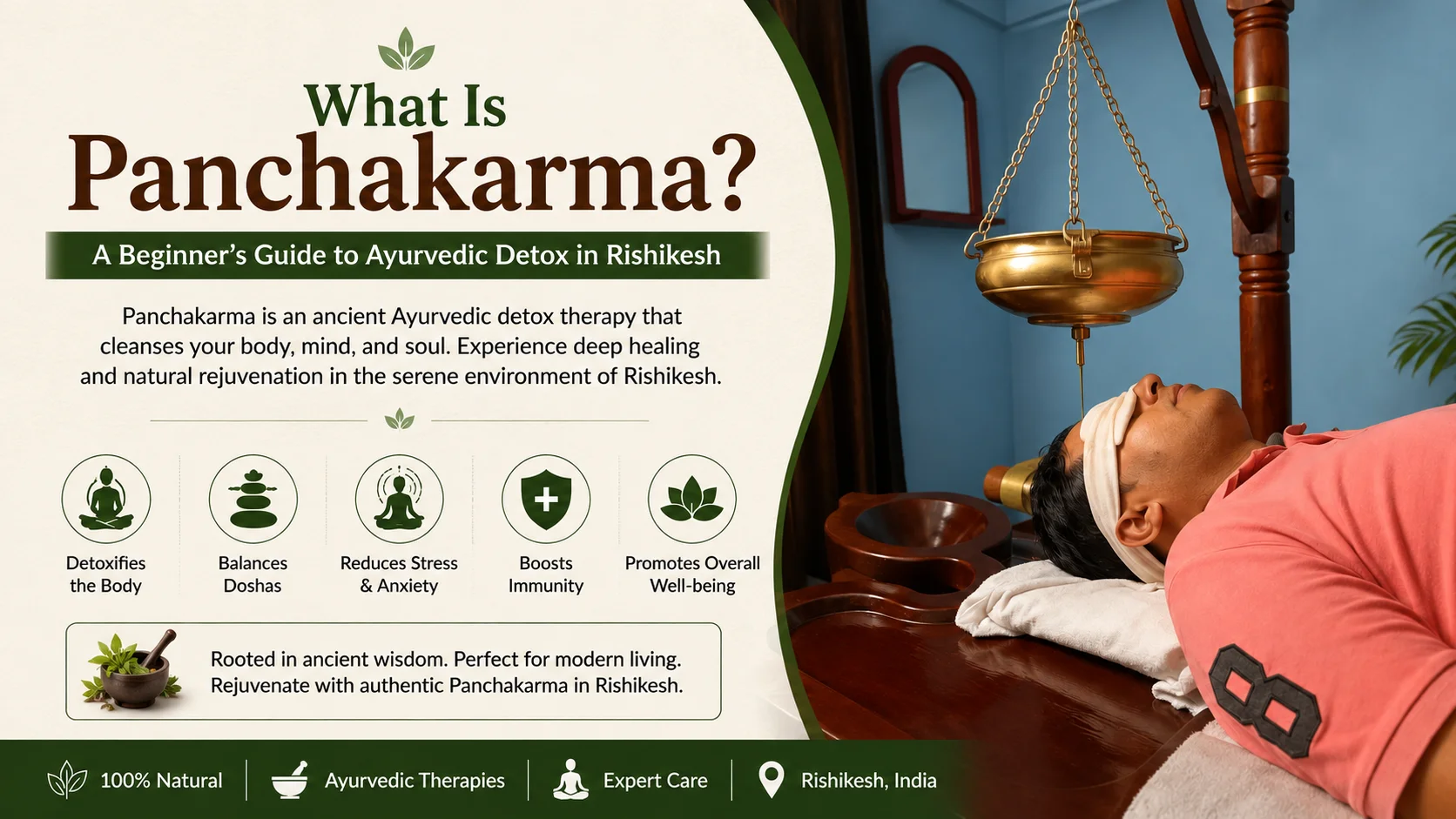
Panchakarma translates roughly to "five actions" or "five therapies." It isn't one treatment — it's a structured program built from a sequence of different therapies, each aimed at removing accumulated toxins (called "ama" in Ayurveda) from a different part of the body. That's the key difference from a spa treatment: Panchakarma isn't something you drop into for an afternoon. It's a process with a beginning, middle, and end, usually spanning anywhere from 3 to 21 days depending on what you're addressing.
The Three Stages
Purva Karma (Preparation). Before any of the deeper therapies begin, your body is prepared for them. This typically involves internal oleation — consuming small, gradually increasing amounts of medicated ghee or oil over several days — combined with external oil massage (Abhyanga) and steam therapy (Swedana). The purpose is to loosen toxins that have settled deep in tissue so they can actually be eliminated in the next stage, rather than just moved around.
Pradhan Karma (Main Therapies). This is where the actual "five actions" happen, though not everyone receives all five — a practitioner selects which ones your body needs based on your consultation. They can include Vamana (therapeutic vomiting, used far less commonly today), Virechana (purgation), Basti (medicated enemas, considered one of the most important therapies in classical Ayurveda), Nasya (nasal administration of oils or herbs), and Raktamokshana (bloodletting, rarely used in modern clinical settings). In most Rishikesh spa and wellness settings, Basti and Virechana are the therapies clients are most likely to actually undergo, always under a trained practitioner's supervision.
Paschat Karma (Post-Care). This is the part people skip in their heads and shouldn't. After the main therapies, there's a structured return to normal eating and activity — starting with very light, easily digestible food and gradually building back up. Rushing this stage, going straight back to heavy food, alcohol, or a demanding travel schedule, undoes a lot of the benefit of the days before it.
How Long Does It Actually Take?
This is the most common question, and the honest answer is: it depends on what you're treating and how deep the imbalance is. A short introductory program is often 3 to 5 days, and functions more as a gentle reset for people who just want to feel the process without a major time commitment. A more complete program, especially for chronic issues like persistent digestive problems, joint pain, or high stress, usually runs 7 to 14 days. Serious, deeply rooted conditions can call for 21 days or more, though this is less common for first-time visitors.
If this is your first Panchakarma, a 7-day program is a reasonable, well-tested middle ground — long enough to move through preparation, main therapy, and post-care properly, short enough to fit into most travel itineraries.
What You'll Actually Feel, Day by Day
The first couple of days are usually the easiest — oil massages, steam, and a lighter version of your normal diet. Around the middle of the program, when the main therapies begin, it's common to feel more tired than usual, sometimes slightly emotional, occasionally with mild headaches or digestive changes as the body starts eliminating what it's been holding onto. This isn't a sign something's wrong; it's usually described as part of the process. A good practitioner will check in daily and adjust pacing if you're not tolerating it well. By the final days, most people report feeling noticeably lighter, clearer-headed, and better rested than when they arrived — though it's worth being honest that this varies person to person, and it's not an instant, dramatic transformation for everyone.
Why Do This in Rishikesh Specifically
Panchakarma is demanding on the body, and doing it properly requires trained supervision, not a checklist followed by someone without real clinical experience. Rishikesh has a deeper concentration of practitioners trained in classical, supervised Panchakarma than most places offering it as a tourist add-on, partly because the practice here is tied to generations of family and gurukul training rather than short certification courses. That matters more for Panchakarma than for a single massage, because the internal therapies especially need to be adjusted correctly to your body — done carelessly, they can do more harm than good.
Is Panchakarma Right for You
Panchakarma tends to help most with chronic, low-grade issues — persistent fatigue, sluggish digestion, joint stiffness, disrupted sleep, or stress that hasn't responded to shorter interventions. It's not designed as a crash-detox or weight-loss shortcut, and anyone marketing it that way is oversimplifying it. If you're currently on significant medication, pregnant, recovering from recent surgery, or managing a serious chronic illness, a proper consultation before booking is essential — parts of the program may need to be modified or skipped entirely, and a responsible practitioner will tell you that upfront rather than push you into a package.
FAQ
How many days of Panchakarma should a beginner do? A 7-day program is generally the recommended starting point — long enough to complete preparation, main therapy, and post-care properly without an excessive time commitment.
Is Panchakarma painful or uncomfortable? It's not painful, but it can be physically and emotionally demanding, especially in the middle days when the body is actively eliminating toxins. Mild fatigue or emotional sensitivity during this period is common and expected.
Do I need to fast during Panchakarma? Not in the sense of eating nothing — you'll typically follow a specific, simplified diet designed to support the process, adjusted in stages rather than a strict fast throughout.
Can I do Panchakarma while sightseeing or trekking in Rishikesh? It's not recommended. The body needs rest during the process, and heavy physical activity can interfere with the therapies and post-care stage. Plan Panchakarma as its own dedicated block of time.
Is Panchakarma safe for everyone? Most healthy adults tolerate it well under proper supervision, but it needs to be adapted or avoided for certain conditions — pregnancy, recent surgery, some chronic illnesses, or specific medications. Always disclose your full medical history during consultation before booking.