If you've come across the word "Abhyangam" while researching Ayurvedic treatments in Rishikesh, and you're not sure whether it's the same thing as the "Abhyanga" massage every other spa mentions — it is. Abhyangam is simply a regional spelling and pronunciation variation, more commonly used in South India and by Ayurvedic institutions with roots in Kerala's classical tradition. The treatment itself is the same foundational Ayurvedic oil massage practiced across the country, including here in Rishikesh, just referred to slightly differently depending on where the terminology comes from.
That said, if you're specifically looking for it under this name, it's worth understanding what the treatment actually involves, since the word itself doesn't tell you much on its own.
What Abhyangam Actually Involves
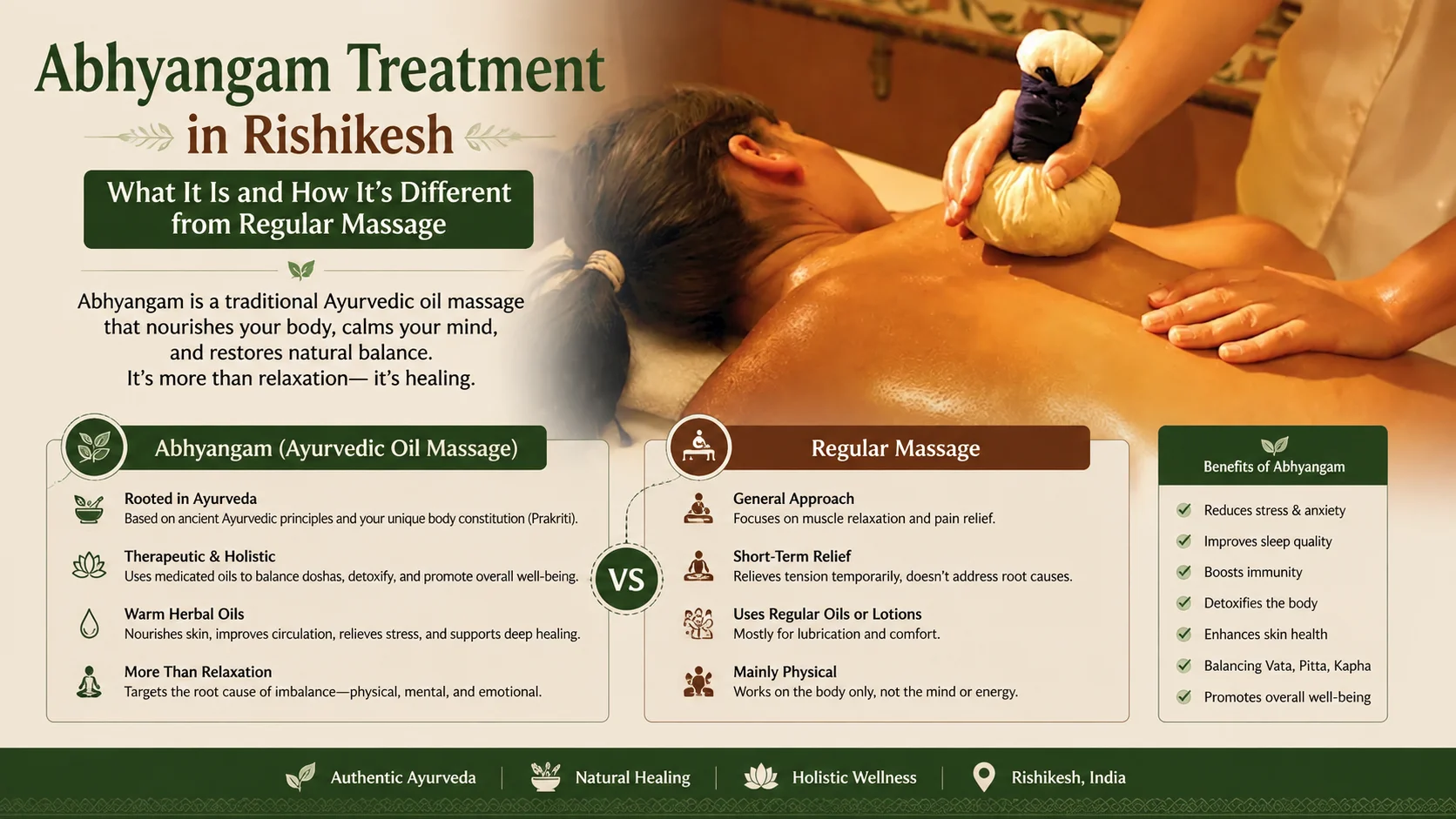
At its core, Abhyangam is a full-body warm oil massage using long, rhythmic strokes, applied by a trained therapist working systematically across the body — generally following the direction of the limbs and moving toward the heart to support circulation and lymphatic flow. The oil itself is central to the treatment, not incidental to it. Depending on your constitution and current imbalance, the oil base and added herbs are selected specifically for you — warming sesame-based oils for someone feeling dry or anxious, cooling coconut-based oils for someone running hot or agitated, herb-infused blends for more targeted concerns like joint stiffness or poor sleep.
A proper Abhyangam session typically opens with a short consultation, not a straight walk-in to the massage table. This is where a trained therapist asks about your health, stress levels, sleep, and any specific discomfort, which shapes both the oil selection and the areas given extra attention during the session.
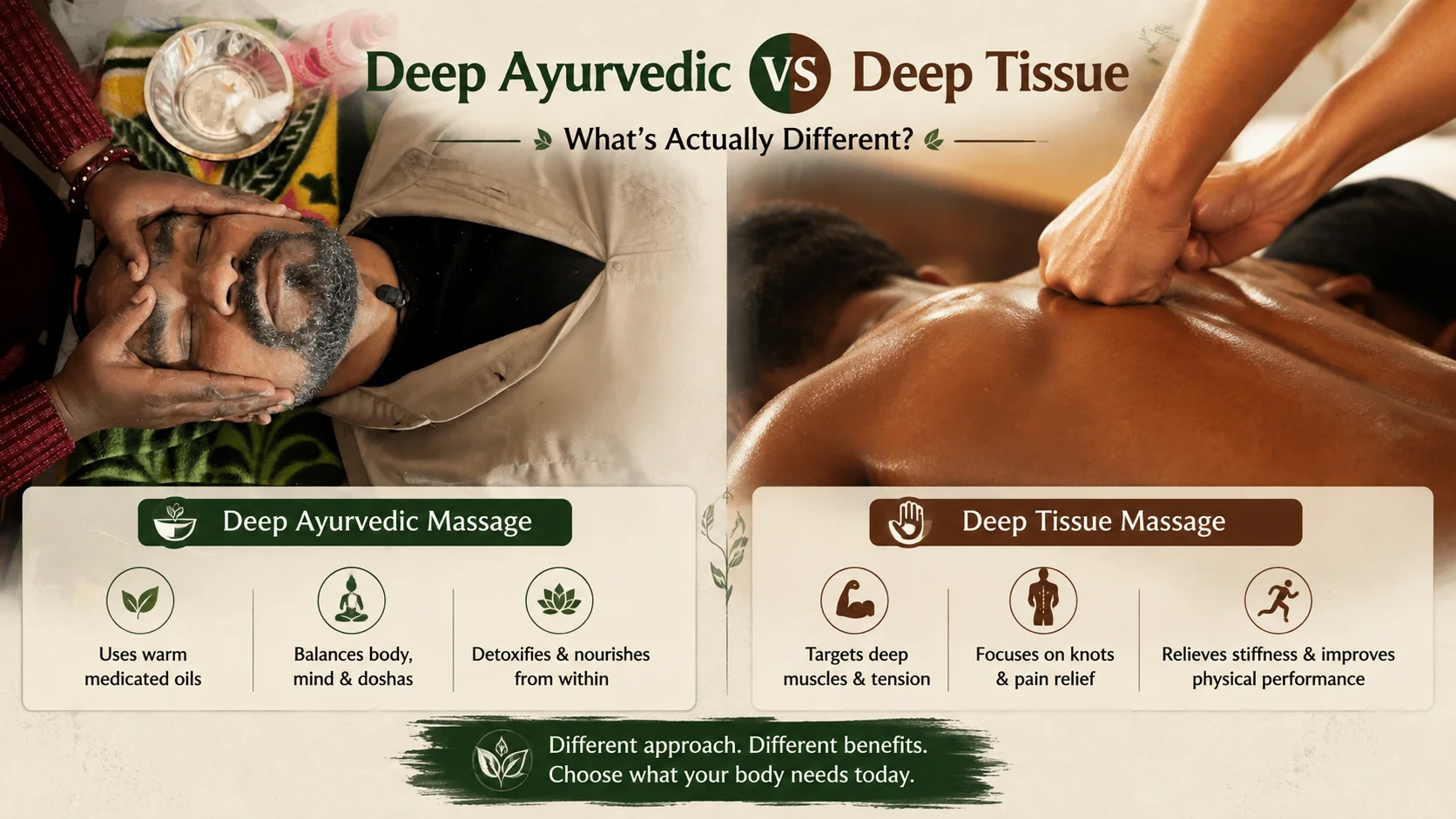
How It's Different from a Regular Spa Massage
The difference isn't really in the physical technique — long strokes, firm pressure, full-body coverage are common to many massage traditions. The real difference is in the intent and structure behind it. A standard spa massage is generally built around relaxation alone, using a generic oil or lotion regardless of who's on the table. Abhyangam is built around the Ayurvedic understanding of doshas — the idea that everyone's body runs differently, and that the oil, pressure, and pacing should be adjusted to what your specific body needs that day, not applied identically to everyone.
Practically, this means two people booking Abhyangam on the same afternoon might leave with two different oils, slightly different pressure, and different areas emphasized, based entirely on their individual consultation. A generic spa massage doesn't work this way.
What to Expect During and After
Sessions typically run 60 to 90 minutes for a full-body treatment. The oil is warmed before application, and pressure is usually firmer than people expect from something described as calming — it's meant to work into the muscle and stimulate circulation, not simply glide across the surface. Afterward, you'll be noticeably oily; a good practitioner lets the oil sit and absorb for a while before a warm shower, since the absorption itself is part of the treatment's benefit, not something to rinse off immediately.
It's common to feel deeply relaxed, sometimes a little tired, in the hours following the session. Staying hydrated and avoiding anything too stimulating — caffeine, alcohol, heavy food — for the rest of the day helps the effects settle properly.
Finding Genuine Abhyangam in Rishikesh
Since the term shows up under a few different spellings, the more useful thing to check isn't the exact name on the sign, but whether the place actually practices it properly — a real consultation before treatment, oil chosen and explained rather than generic, and a therapist who can tell you why they're using a particular technique or oil for you specifically. That's a more reliable signal of authenticity than which spelling of the word appears on the menu.
FAQ
Is Abhyangam the same as Abhyanga? Yes. They refer to the same traditional Ayurvedic oil massage — the difference is regional spelling and pronunciation, not a different treatment.
How long does an Abhyangam session take? A full-body session typically runs 60 to 90 minutes, including time for the oil to be selected and applied properly across the entire body.
Is Abhyangam suitable for first-timers? Yes. It's one of the most common entry-point treatments for anyone new to Ayurveda, and a good practitioner will adjust pressure and pacing for someone unfamiliar with the treatment.
Do I need to prepare anything before an Abhyangam session? No special preparation is required. Avoid a heavy meal beforehand, and wear something you don't mind getting oil on for the trip home afterward.
Can Abhyangam help with stress and poor sleep? Many people report feeling calmer and sleeping better after a session, largely due to the combination of warm oil, firm rhythmic strokes, and the calming herbs often used in the oil blend, though individual results vary.