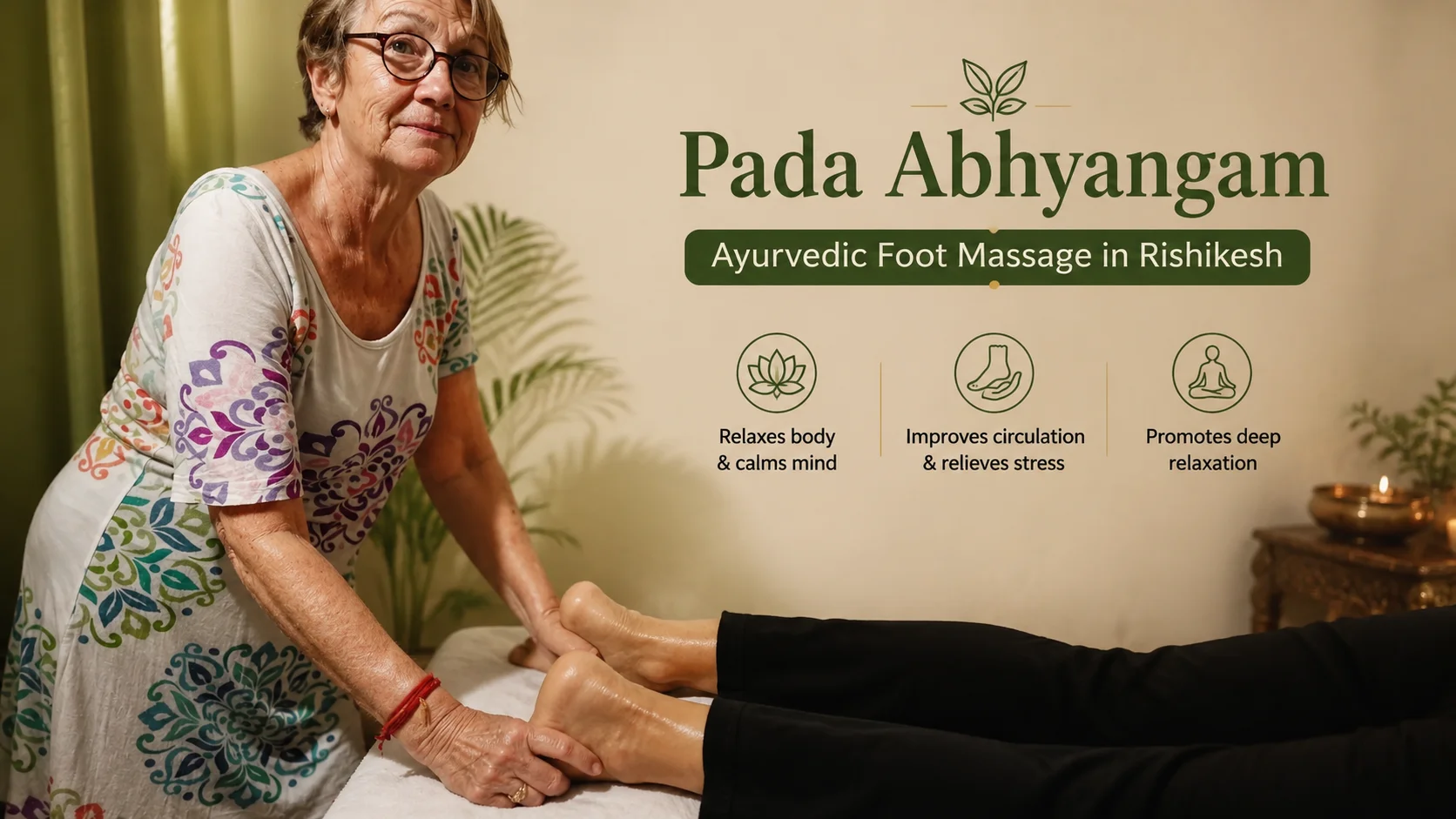
If you've searched for "Pada Abhyangam" specifically rather than just "foot massage," you've likely already come across the idea that this isn't just a foot rub with a Sanskrit name attached to it. Pada Abhyangam — "pada" meaning foot, "abhyangam" meaning oil massage — is a distinct, deliberate treatment within classical Ayurveda, built on the idea that the feet aren't just tired at the end of the day, they're directly connected to the balance of the whole body.
What Pada Abhyangam Actually Is
Pada Abhyangam is a focused Ayurvedic oil massage of the feet, using warm, herb-infused oil worked into the soles, arches, heels, and toes with firm, deliberate pressure. It follows the same core principles as full-body Abhyanga — oil selection based on your dosha, pressure adjusted to what your body currently needs — just concentrated entirely on the feet rather than spread across the whole body.
In Ayurvedic tradition, the feet are considered closely connected to the nervous system and overall vitality, partly through the concept of marma points located across the soles. This is part of why Pada Abhyangam is traditionally recommended not just for tired feet, but as something closer to a full-body treatment delivered through a single, concentrated area.
How It's Different from a Regular Foot Massage
A standard foot massage generally focuses on relieving physical fatigue — working tired muscles after a day of walking, using pressure and kneading similar to what you'd get on any other part of the body. Pada Abhyangam works from a different starting point. The oil itself is chosen specifically for your dosha, the same way it would be for a full Abhyanga session, and the technique includes attention to specific marma points on the foot believed to have a broader calming or energizing effect on the body, not just localized relief.
Practically, this means Pada Abhyangam tends to feel more deliberate and slower-paced than a typical foot rub, and its intended benefit extends beyond just "my feet feel less tired" — many people report feeling calmer overall, and it's traditionally associated with supporting better sleep specifically.
What the Treatment Actually Involves
A session opens with a brief check on your current state — whether you're dealing with fatigue, poor circulation, disrupted sleep, or just general tension — which shapes the oil blend used. Warm oil is then worked into the feet using firm, systematic pressure across the sole, arch, heel, and toes, often extending slightly up into the lower calf. Particular attention is typically given to the ball of the foot and specific points along the arch, areas considered especially significant in Ayurvedic marma theory. Sessions typically run 30 to 45 minutes.
Because oil is used generously, it's common for the treatment to finish with a light wipe-down rather than requiring a full shower, though the oil is often left to continue absorbing for a while afterward rather than removed immediately.
Why It's Traditionally Linked to Better Sleep
Ayurvedic tradition places particular emphasis on Pada Abhyangam in the evening specifically, often recommending it before bed as part of a broader routine for calming an overactive mind. The reasoning connects to the same marma point theory — certain points on the foot are believed to have a directly calming effect on the nervous system when worked correctly, which is part of why this specific treatment, more than a general foot massage, is associated with easing insomnia and restlessness rather than just physical fatigue.
Who Pada Abhyangam Suits Best
This treatment is particularly well suited to travelers and trekkers dealing with genuinely tired, overworked feet after long days of walking around Rishikesh, anyone experiencing poor sleep or a restless, overactive mind in the evenings, and those wanting a shorter, more affordable introduction to Ayurvedic treatment principles without committing to a full-body session. It also pairs well as an add-on to a longer treatment — many guests combine it with a full Ayurvedic Massage or book it alongside Head & Foot Massage for a fuller combined effect on both circulation and calm.
A Few Things Worth Knowing Before You Book
Mention any foot injuries, fungal infections, or circulatory conditions like diabetes during your consultation, since pressure and technique may need to be adjusted. If you're specifically hoping to address disrupted sleep, evening sessions tend to align best with the treatment's traditional intent, though it's genuinely effective at any time of day for general fatigue and tension relief.
FAQ
Is Pada Abhyangam just a fancy name for a foot massage? Not quite. While it does address foot fatigue, Pada Abhyangam follows Ayurvedic dosha-based oil selection and marma point technique, giving it a broader intended effect on the nervous system and overall balance, not just localized muscle relief.
How long does a Pada Abhyangam session take? Typically 30 to 45 minutes, making it a shorter, more affordable option compared to a full-body Ayurvedic massage.
Can Pada Abhyangam really help with sleep? Ayurvedic tradition strongly associates evening Pada Abhyangam with calming the nervous system and easing restlessness before bed, largely through its effect on specific marma points on the foot. Many guests report feeling noticeably calmer afterward.
Is Pada Abhyangam suitable for trekkers with sore feet? Yes, it's particularly well suited to genuinely tired, overworked feet after extended walking or trekking, combining real physical relief with the broader calming effect of traditional technique.
Can I combine Pada Abhyangam with a full-body massage? Yes, this is a common and popular pairing — many guests add it to a full Ayurvedic Massage session, or combine it with Head & Foot Massage for a fuller treatment.
Is Pada Abhyangam safe for people with diabetes? It can be, but circulatory conditions like diabetes should always be mentioned during consultation, since pressure and technique may need to be carefully adjusted for foot sensitivity or circulation concerns.