Anyone scanning a spa menu for something firmer than a relaxation massage tends to land on one of two options: Deep Ayurvedic Massage or Deep Tissue Massage. Both promise real pressure and real therapeutic benefit, and both get chosen by people dealing with the same basic problem — chronic tension that a lighter massage hasn't touched. But they come from genuinely different traditions, use different tools, and suit slightly different situations. Here's the actual difference, not just the marketing language.
Where Each One Comes From
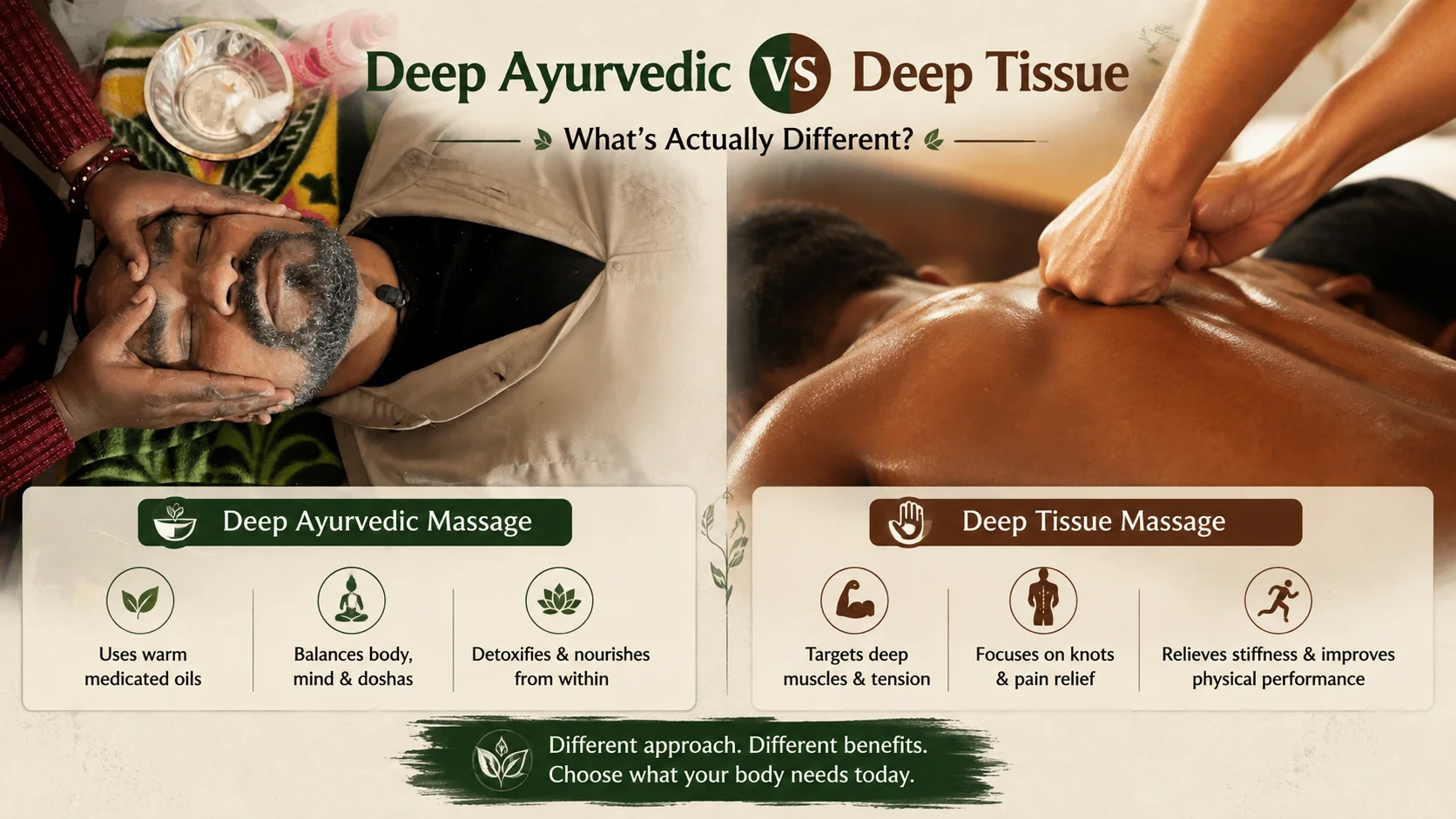
Deep Tissue Massage is a Western clinical massage technique, developed specifically to address chronic muscle tension and adhesions in deeper layers of tissue. It uses slow, firm strokes and concentrated pressure — often applied with fingers, knuckles, or forearms — directly targeting problem areas identified before the session begins.
Deep Ayurvedic Massage, on the other hand, is a firmer variation of classical Abhyanga, built on Ayurvedic principles rather than Western anatomy-focused technique. It still uses warm, herb-infused oil and follows dosha-based logic for oil selection and pacing, but applies more sustained pressure and slower strokes than a standard Abhyanga session, aimed at chronic tension without abandoning the Ayurvedic framework entirely.
The Practical Differences You'll Feel
Oil use. Deep Tissue Massage typically uses a light, often unscented oil or lotion, purely functional for reducing friction. Deep Ayurvedic Massage uses generous, warm, herb-infused oil as an active part of the treatment — the oil itself is considered therapeutic, not just a lubricant.
Approach to pressure. Deep Tissue work tends to be more localized and clinical — the therapist works a specific problem area with sustained, targeted pressure, sometimes uncomfortable in the moment, aimed at releasing a particular knot or adhesion. Deep Ayurvedic Massage applies firm pressure across the whole body in a more continuous, flowing sequence, still adjusted for tension but less isolated to single trouble spots.
Underlying framework. Deep Tissue Massage doesn't reference doshas, energy points, or Ayurvedic theory — it's purely a Western therapeutic technique. Deep Ayurvedic Massage is shaped by a consultation covering your constitution and current imbalance, meaning the oil, pacing, and areas of focus are personalized within an Ayurvedic framework, not just adjusted for physical tension alone.
Aftereffect. Deep Tissue sessions can leave you slightly sore in the treated area for a day or so afterward, similar to how a hard workout feels the next day — a normal response to working through tight tissue. Deep Ayurvedic Massage tends to leave you feeling worked-on but more broadly relaxed, with the oil's calming effect softening the intensity of the pressure.
Which One Should You Book?
If you have a specific, localized problem — a persistently tight shoulder, a knot in your lower back from travel or trekking — Deep Tissue Massage is generally more precise and effective for isolating and releasing that exact spot.
If you want firm, therapeutic pressure but also want the broader benefits of warm oil, herbal treatment, and a personalized Ayurvedic approach — not just physical tension relief but a more holistic reset — Deep Ayurvedic Massage is the better fit.
Neither one is objectively "better." They're built for slightly different goals: one is a targeted clinical tool, the other is a firmer version of a broader therapeutic tradition. If you're not sure which describes what you need, mention both options during your consultation — a good therapist can tell fairly quickly which approach your body is likely to respond to better that day. New to Ayurvedic massage entirely? Read our first-visit guide to know what to expect first-visit guide.
FAQ
Is Deep Ayurvedic Massage more painful than regular Ayurvedic massage? It's firmer, not necessarily painful. The pressure is more sustained than a standard Abhyanga, but it shouldn't be sharply painful — tell your therapist if it feels like too much.
Can I combine Deep Tissue and Deep Ayurvedic Massage in one visit? It's not typically done in the same session, since the techniques and oils differ, but you could book them on separate days if you want to compare which one your body responds to better.
Which is better for chronic back pain, Deep Tissue or Deep Ayurvedic Massage? For a specific, localized area of chronic pain, Deep Tissue Massage's targeted approach is often more effective. For broader chronic tension alongside stress or poor sleep, Deep Ayurvedic Massage's fuller, oil-based approach may offer more overall benefit.
Is Deep Tissue Massage part of Ayurveda? No. Deep Tissue Massage is a Western clinical technique, distinct from Ayurvedic massage traditions, though many Ayurvedic spas offer it alongside their traditional treatments.
How firm is the pressure in a Deep Ayurvedic Massage? Firmer and more sustained than a classic Abhyanga, but still working within a flowing, full-body sequence rather than isolated deep-tissue-style pressure on single points.