"Food is medicine" gets said often enough in wellness circles that it's easy to skim past without really engaging with what it means in Ayurvedic practice specifically. In Ayurveda, this isn't a loose metaphor — it's a genuinely structured approach, where what and how you eat is considered directly connected to your digestion, energy, and overall balance, and where the right diet looks meaningfully different depending on your individual constitution.
Why There's No Single "Ayurvedic Diet"
This is the most common misunderstanding people bring to the topic. Ayurveda doesn't prescribe one universal diet — no single list of "good" and "bad" foods that applies to everyone equally. Instead, dietary guidance is built around your dominant dosha, since what supports balance for one constitution can actually create imbalance for another. A food that's grounding and beneficial for someone with a Vata imbalance might be heavy and sluggish-inducing for someone already dealing with excess Kapha.
Eating for Vata: Warmth and Grounding
Vata is associated with dryness, coldness, and a tendency toward feeling scattered or ungrounded when out of balance. Dietary guidance for Vata generally favors warm, cooked, moist foods over cold, raw, or dry ones — think warm soups and stews rather than cold salads, and healthy fats and oils incorporated regularly rather than avoided. Regular meal timing matters more here too, since irregular eating tends to aggravate Vata's already unstable tendency.
Eating for Pitta: Cooling and Calming
Pitta is linked to heat, intensity, and inflammation when imbalanced. Dietary guidance here favors cooling foods over spicy, hot, or heavily fried options — think cucumber, coconut, and sweeter fruits rather than chili-heavy or very acidic foods. Moderation with alcohol and caffeine also matters more for Pitta-dominant constitutions, since both tend to intensify Pitta's heat-related tendencies.
Eating for Kapha: Light and Stimulating
Kapha is associated with heaviness, sluggishness, and stagnation when out of balance. Dietary guidance favors lighter, warmer, more stimulating foods over heavy, oily, or very sweet options — favoring spices like ginger and black pepper that stimulate digestion, and reducing dairy and very rich, dense foods that tend to compound Kapha's naturally heavier tendency.
It's Not Just What You Eat, But How
Ayurvedic dietary principles place real emphasis on eating habits, not only food choices themselves. Eating at roughly consistent times each day, eating without significant distraction, chewing thoroughly, and avoiding eating when highly stressed or immediately before sleep are all considered meaningfully connected to how well the body actually digests and benefits from food — regardless of which specific foods are on the plate.
How This Connects to Treatment
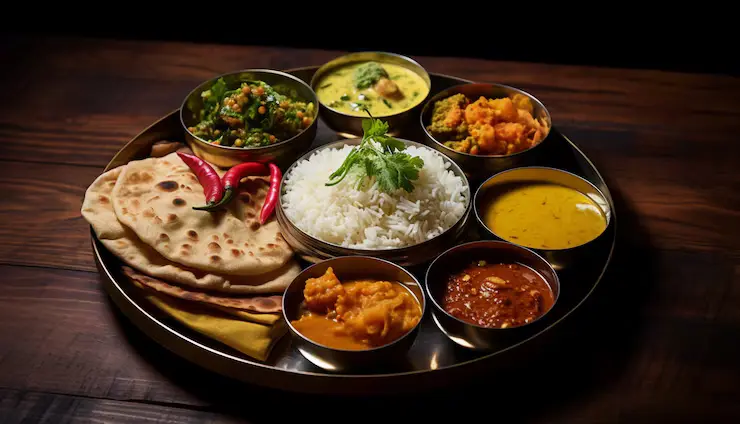
If you've booked a retreat, Panchakarma program, or any multi-day stay with us, you'll notice meals are deliberately simple, warm, and easy to digest rather than following a typical restaurant-style menu — this isn't a limitation of the kitchen, it's an intentional part of the treatment itself, designed to support whatever therapeutic work is happening alongside it. Understanding the dietary logic behind this tends to make the experience feel more coherent, rather than just an unusual or restrictive eating pattern layered on top of treatment.
Bringing This Home
You don't need a full program to start applying some of these principles. Simply noticing which foods and eating patterns leave you feeling energized and clear versus heavy or scattered is a reasonable starting point, and it often points fairly clearly toward which dosha tendencies are most relevant to your own body, even without a formal consultation.
FAQ
Do I need to know my dosha before following Ayurvedic dietary principles? It genuinely helps, since the recommendations differ meaningfully by dosha, but paying attention to how different foods and eating patterns make you feel is a reasonable starting point even without a formal assessment.
Is the Ayurvedic diet the same as a specific named diet, like keto or paleo? No. It's a personalized framework based on your individual constitution, not a fixed universal food list, which is a meaningfully different approach from most popular structured diets.
Can Ayurvedic dietary principles help with digestive issues? Many people find that eating according to their dosha and following consistent, mindful eating habits supports better digestion, though persistent digestive issues are worth discussing directly with a practitioner.
Why are meals during a retreat or Panchakarma program so simple? Simple, warm, easily digestible meals are an intentional part of the treatment itself, designed to support whatever therapeutic work is happening during your program, not a limitation of what's available.
How do I find out my dosha type? A consultation with a trained Ayurvedic practitioner is the most reliable way, since it considers your physical characteristics, tendencies, and current imbalances together rather than a single isolated factor.