There's a specific kind of hesitation that comes with booking a multi-day retreat sight unseen, especially when it's costing real money and eating up several days of a trip. Most retreat pages describe the destination beautifully and say almost nothing about what an actual day involves — what time you're waking up, how much of the day is treatment versus free time, whether you'll be bored out of your mind by day three. If you're trying to decide whether a 5-day Ayurveda retreat in Rishikesh is worth it, here's what the days genuinely look like, without the brochure language.
Who a 5-Day Retreat Actually Suits
Five days is a middle-ground length — long enough to move past a single treatment's temporary effect and into something with more lasting impact, short enough to fit into most travel schedules without requiring a dedicated multi-week trip. It tends to suit people who want a structured wellness reset rather than a full clinical Panchakarma detox, travelers layering a few days of stillness onto a longer Rishikesh or Himalaya trip, and anyone curious about Ayurveda who isn't ready to commit to a 30-day program but wants more than a single spa afternoon.
It's a less intense entry point than the full Panchakarma course, and a more structured, immersive option than simply booking individual treatments day to day.
Day 1: Arrival and Consultation
The first day is lighter than people expect — mostly settling in and a proper consultation, usually 30 to 45 minutes, covering your health history, current concerns, sleep, digestion, and stress levels. This shapes which treatments and oils you'll actually receive over the following days, rather than a fixed, identical schedule for every guest. Expect a lighter first treatment in the afternoon, often a gentle full-body Abhyanga, to ease into the program rather than starting with anything intense.
Day 2–3: The Core of the Program
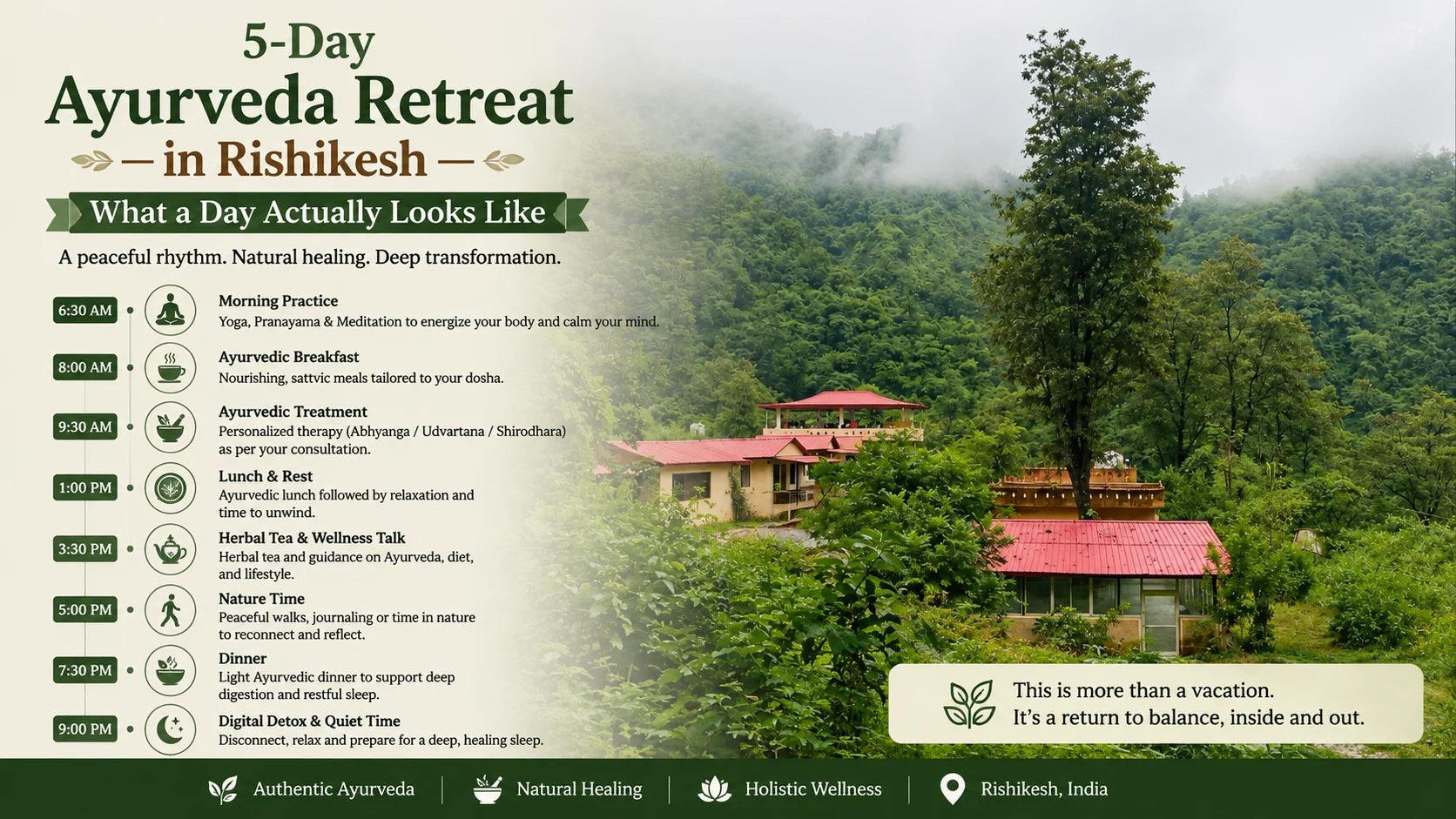
These middle days carry the bulk of the actual treatment work. Mornings typically start early with a light herbal tea or warm water, sometimes paired with basic yoga or breathing practice before breakfast. Treatments are scheduled through the late morning and early afternoon — commonly a rotation that might include Abhyanga, Shirodhara, Udvartana, or Marma point work, depending on what came out of your initial consultation. Meals are simple, warm, and easy to digest, generally following Ayurvedic principles rather than a typical restaurant menu — expect kitchari, seasonal vegetables, and herbal teas rather than heavy or processed food.
Afternoons usually have real unstructured time — rest, reading, a walk along the Ganges, or simply doing nothing, which for a lot of people is the actual point of the retreat rather than a gap in the schedule. Evenings tend to be quiet, sometimes with a short guided relaxation or breathing session before an early dinner and early rest.
Day 4: Deeper Work
By this point, most guests have adjusted to the rhythm — earlier waking, lighter food, less stimulation than a normal travel day — and this is typically when slightly more focused treatment happens, building on what's been observed in the earlier sessions. If Marma point therapy or a more targeted treatment for a specific complaint is part of your program, this is often where it's concentrated.
Day 5: Integration and Departure
The final day is intentionally lighter, mirroring the first. A closing consultation is common, where the practitioner shares observations from the week and gives practical guidance for continuing at home — simple dietary adjustments, self-massage techniques, or lifestyle habits based on what came up during your stay. This is the part people often undervalue going in and appreciate most afterward, because it's what actually helps the effects of the retreat outlast the retreat itself.
What You Won't Get
It's worth being direct about this: five days is not enough time for a deep clinical detox in the way a full Panchakarma program is designed to achieve, and it's not going to resolve a serious chronic condition on its own. It's also not a silent meditation retreat — there's genuine conversation, guidance, and human interaction throughout, which suits most people but is worth knowing if you were picturing total silence.
What People Actually Notice by the End
Reported experiences vary, understandably, but common themes are better sleep, less physical tension, calmer digestion from the simplified diet, and a noticeably slower, calmer state of mind by day five compared to day one — less about a dramatic transformation and more about a genuine, tangible reset. How much of that sticks afterward depends heavily on what you do with the guidance you're given once you're back in normal daily life.
Practical Things to Know Before Booking
Bring comfortable, easily washable clothing, since you'll likely have oil on your clothes at some point during the week. Mention any dietary restrictions, allergies, or medical conditions clearly during booking, not just on arrival, so meals and treatments can be planned around them properly. And go in without a rigid list of expectations — the specific treatments you receive are meant to be shaped by your consultation, not a fixed menu you pick from in advance.
Ready to Experience It Yourself?
The 5-Day Ayurveda Retreat includes daily consultations, personalized treatments,
and simple Ayurvedic meals — all in Tapovan, Rishikesh.
5-Day Ayurveda Retreat in Rishikesh — What a Day Actually Looks Like
FAQ
Is a 5-day retreat enough time to see real results? For general stress relief, better sleep, and a physical reset, five days is generally enough to notice a genuine difference. For deeper or chronic issues, a longer program like Panchakarma is usually more appropriate.
What's included in the retreat price? Typically accommodation, meals, and daily treatments for the full duration, though exact inclusions vary by program — always confirm what's covered before booking, particularly around accommodation type and number of treatments per day.
Do I need any prior experience with Ayurveda or yoga? No prior experience is needed. The program is built around your consultation, not a fixed skill level, so beginners and experienced guests are both accommodated.
Will I be hungry on the retreat diet? Meals are simple and lighter than a typical diet, but they're designed to be nourishing and satisfying, not restrictive in a way that leaves you hungry. Portion and content are adjusted based on your consultation.
Can I combine a retreat with sightseeing in Rishikesh? Light activity like a short walk is generally fine, but the retreat is designed around rest and treatment, so heavy sightseeing, trekking, or a packed daily itinerary alongside it isn't recommended — it works against the point of the program.
What should I bring for the week? Comfortable clothing you don't mind getting oil on, any personal medications, and a genuinely open schedule — avoid booking other commitments during the retreat days.