Most people booking their first Ayurvedic treatment default to oil massage without realizing there's an entirely different category of treatment sitting right next to it on the menu — dry massage, known as Udvartana. The two get lumped together as "traditional Indian massage," but they work through almost opposite mechanisms, target different concerns, and honestly feel completely different on the body. If you've been staring at a treatment menu trying to decide between them, here's what actually separates the two.
What Abhyanga (Oil Massage) Does
Abhyanga is the treatment most people picture when they think "Ayurvedic massage" — warm herbal oil, long full-body strokes, a slow, grounding pace. The oil is the active ingredient here. It's absorbed into the skin over the course of the session, meant to lubricate joints, calm the nervous system, and nourish tissue from the outside in. It's the treatment most associated with Vata imbalance in Ayurvedic theory — the dosha linked to dryness, anxiety, and a scattered, ungrounded feeling — because the oil and the slow rhythm are both considered directly calming to Vata.
Physically, Abhyanga tends to leave you feeling deeply relaxed, sometimes a little sleepy, and noticeably moisturized. It's the better choice if your skin runs dry, if you're feeling depleted or anxious, or if your main goal is deep relaxation rather than a stimulating effect.
What Udvartana (Dry Massage) Does
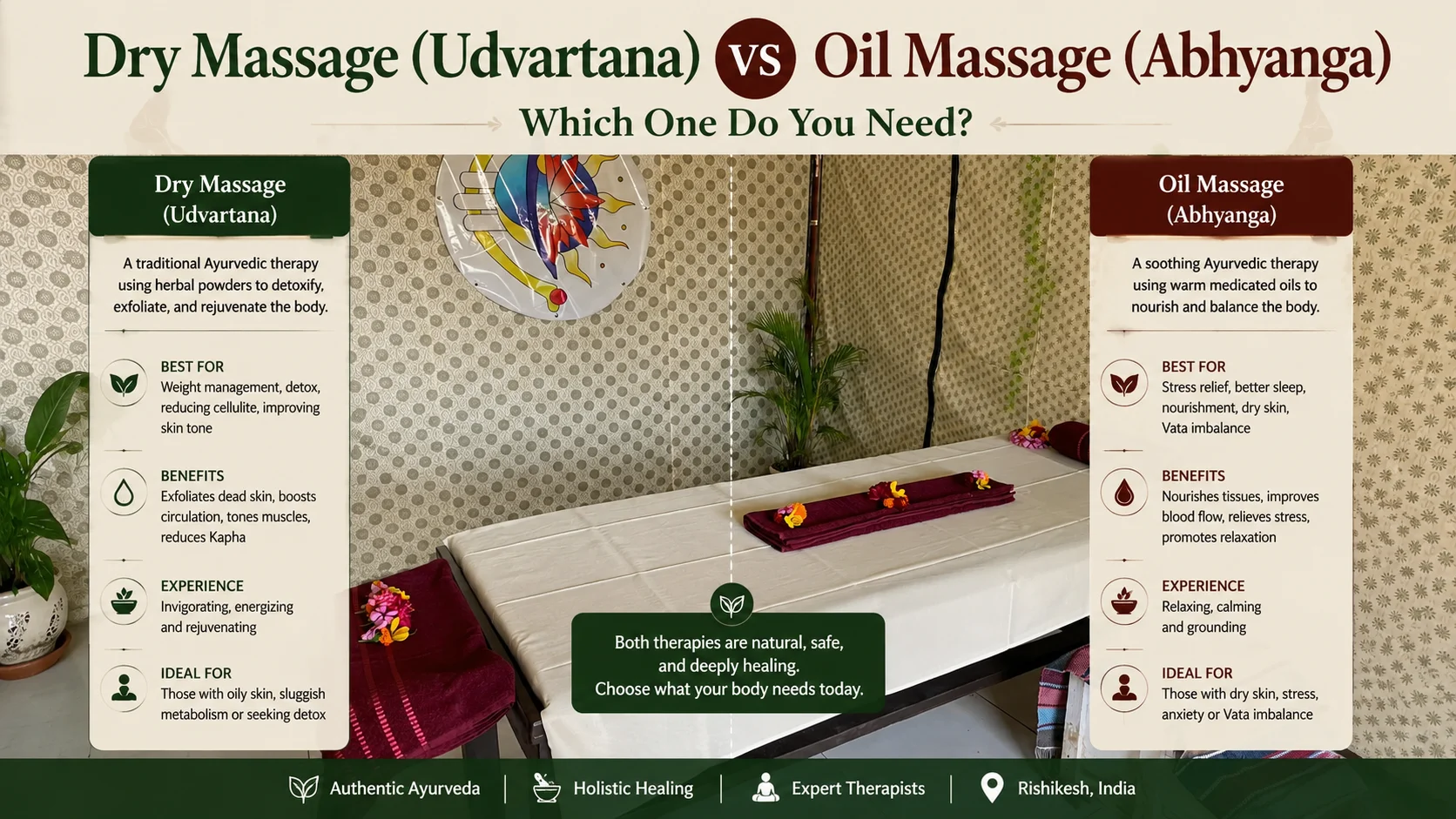
Udvartana flips the approach. Instead of oil, a dry or semi-dry herbal powder — often a blend of gram flour, herbs, and sometimes a small amount of oil to bind it — is worked into the skin using firm, brisk, upward strokes, generally moving against the direction of hair growth rather than the smooth, gliding motion used in Abhyanga. The friction and texture of the powder create a mild exfoliating effect while the massage itself works more vigorously on circulation and muscle tissue than a typical oil massage does.
This treatment is traditionally associated with Kapha imbalance — the dosha linked to sluggishness, water retention, and heaviness — because the brisk, warming, stimulating quality of Udvartana is considered the opposite of Kapha's slow, heavy nature. People often describe it as energizing rather than relaxing, and it's commonly used for improving circulation, toning skin, and supporting weight management as part of a broader Ayurvedic program, rather than as a purely relaxing spa treatment.
The Practical Differences You'll Actually Notice
Sensation. Abhyanga feels slow, warm, and gliding. Udvartana feels brisker, textured, and more stimulating — some people find the friction slightly uncomfortable at first, though it's not meant to be painful.
Aftereffect. Abhyanga tends to leave you calm and possibly sleepy. Udvartana tends to leave you feeling more alert and lighter, sometimes slightly invigorated rather than relaxed.
Skin feel afterward. Abhyanga leaves skin oily and nourished, needing a proper wash to remove residue. Udvartana leaves skin drier initially, often smoother and slightly exfoliated, since the powder absorbs excess oil from the skin rather than adding to it.
Best suited for. Abhyanga suits dry skin, anxiety, insomnia, and general grounding. Udvartana suits sluggish circulation, water retention, cellulite-prone areas, and anyone wanting a more stimulating, toning treatment.
Can You Do Both?
Yes, and in classical Ayurvedic practice, they're often paired rather than treated as either-or. A common sequence is Udvartana first, to stimulate circulation and open up the tissue, followed by Abhyanga, to then nourish and calm the body once it's been activated. If you're not sure which single treatment to book, asking whether a combined session is offered is a reasonable middle path — you get the benefits of both without having to guess correctly on the first try.
How to Decide for Your First Visit
If your main goal is relaxation, stress relief, or you're dealing with dry skin or trouble sleeping, start with Abhyanga. If you're dealing with sluggish circulation, water retention, general heaviness, or you specifically want something that feels more active and toning rather than purely relaxing, Udvartana is the better starting point. And if you genuinely can't decide, mention both to your therapist during the consultation — a good practitioner will be able to tell fairly quickly, based on your skin, energy, and what you describe, which one your body is more likely to respond well to that day. If you're completely new to Ayurvedic treatment, our guide on what to expect on your first Ayurvedic massage visit is a good place to start what to expect on your first Ayurvedic massage visit.
FAQ
Is Udvartana painful? No, but the friction from the dry powder can feel more intense than an oil massage, especially at first. It shouldn't be sharply painful — tell your therapist if the pressure feels like too much.
Which is better for weight loss, Udvartana or Abhyanga? Udvartana is more commonly associated with supporting circulation and reducing water retention as part of a broader wellness routine, but neither treatment should be relied on alone for weight loss. They work best as part of a complete approach that includes diet and activity.
Can I get Udvartana if I have dry or sensitive skin? It's possible, but Abhyanga is generally the better fit for dry or sensitive skin, since Udvartana's exfoliating nature can be more drying. Mention your skin type during consultation so the therapist can adjust the powder blend or recommend the alternative.
How long does an Udvartana session take? Typically 45 to 60 minutes for a full-body treatment, similar in length to a standard Abhyanga session.
Should I shower before or after Udvartana? Showering isn't required beforehand. Afterward, a warm (not hot) shower to remove the powder residue is standard, and skin often feels smoother and slightly exfoliated once it's rinsed off.